


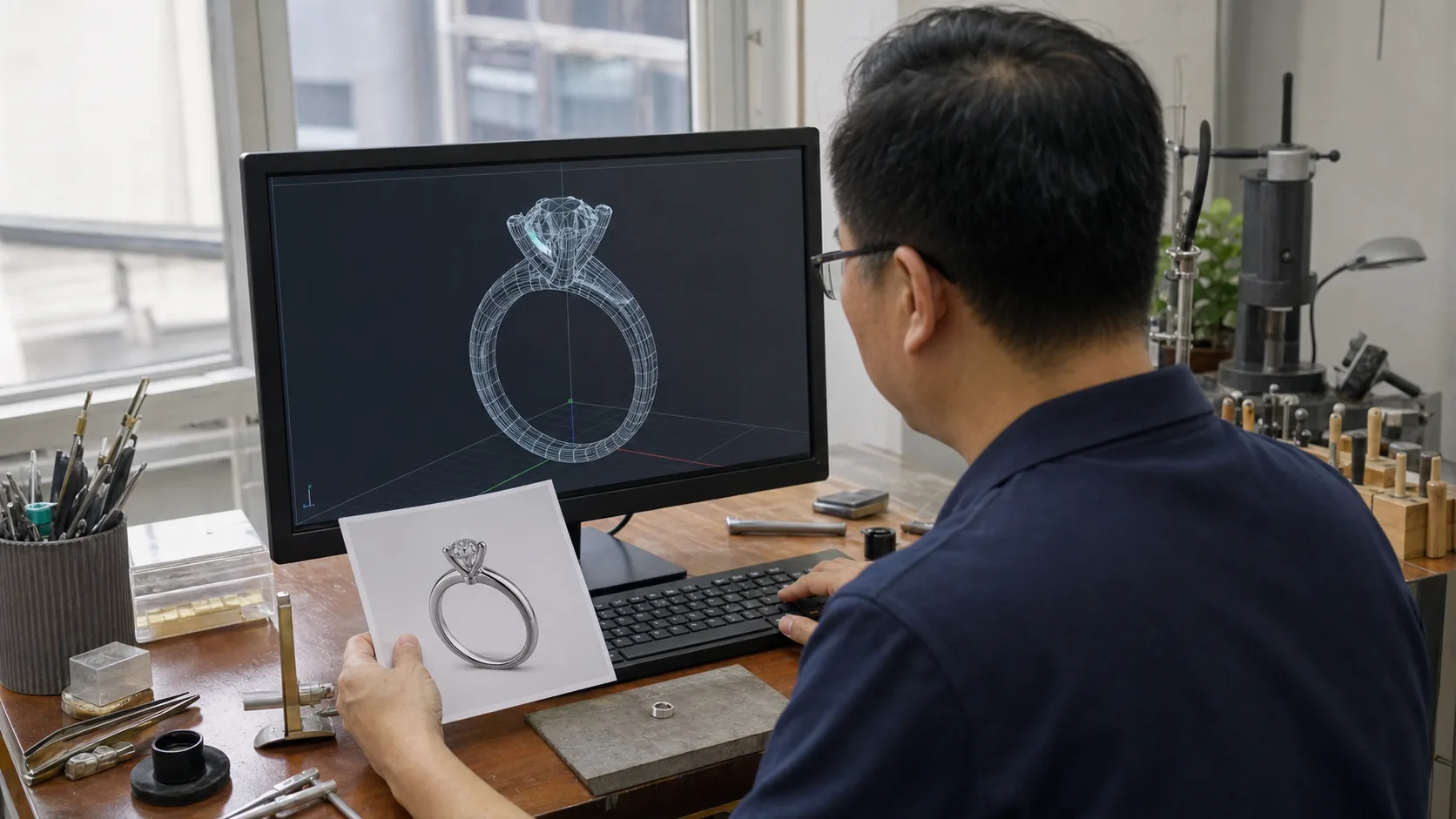
A reference image is a useful starting point, but it is not a production file. It may hide the side profile, the thickness of a shank, the stone size, or the way a setting is built. The first job is to turn that visual idea into a clear set of choices.
Start with the details that change the result
Send the clearest image you have, then add the jewelry type, target metal, stone shape and size, ring size if relevant, and any parts that must stay close to the reference. A buyer can also point out what may change. This prevents a CAD discussion from being based on guesswork.
CAD turns the idea into something measurable
The CAD review is where proportions become visible. It lets the buyer check the profile, setting height, stone position, engraving area and overall balance before a physical sample is made. If the reference leaves an important view unclear, the designer should raise that point instead of copying an assumption.
A sample is the next decision point
A sample gives the buyer something real to inspect: how the piece sits, how the setting looks, and whether the details still make sense at actual size. For 925 sterling silver, 14K, 18K, 24K gold or platinum (Pt) projects, confirm the requested metal and stone specification with the order before moving ahead.
What to approve before production
Keep the approval record simple: final CAD, sample photos or sample feedback, material choice, stone details, surface finish, logo or packaging needs, and any required documentation. This record is more useful than a long chain of messages when a collection moves into production.